
中央の静脈カテーテルキットは、さまざまなコンポーネントの相乗効果を通じてどのように医療目的を達成しますか?
キットのコアコンポーネントの分析
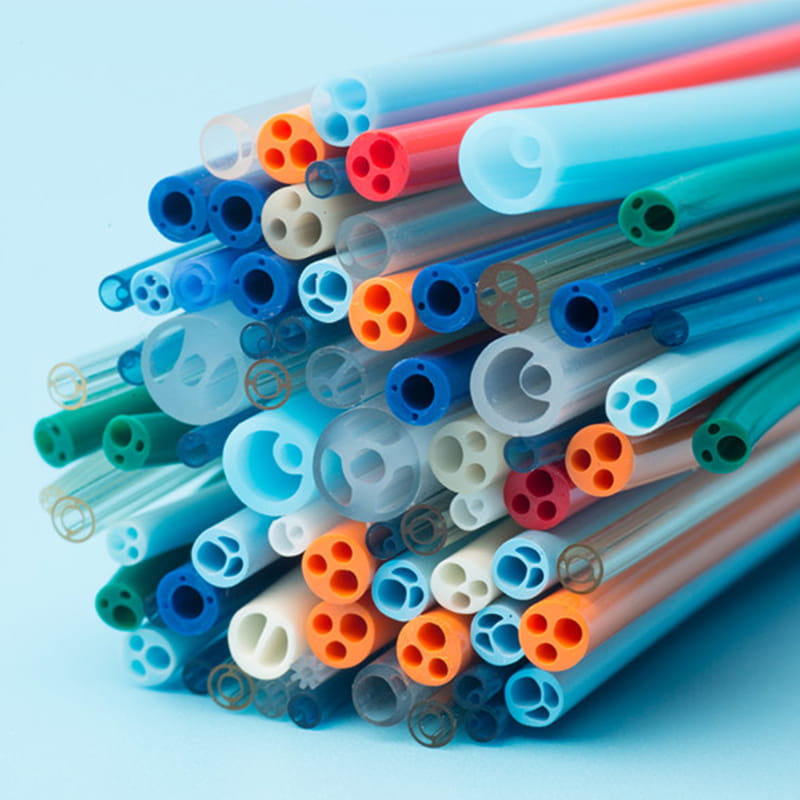
中央静脈カテーテルキット さまざまな主要なコンポーネントが含まれており、それぞれが医療作業プロセス全体でユニークでかけがえのない役割を果たしています。 1つ目は、キットのコアコンポーネントであり、体の外側と体内の中央静脈をつなぐチャネルです。その材料は通常、医療グレードのポリウレタンまたはシリコンで作られています。このような材料は、生体適合性が良好であり、外国体の身体の拒絶を効果的に減らし、感染などの合併症のリスクを減らすことができます。さまざまな種類の中央静脈カテーテルには、構造と機能に独自の特性があります。単一ルーメンカテーテルは単一の治療のニーズに適していますが、二重ルーメンまたはマルチルーメンカテーテルは、注入、採血、薬物投与など、さまざまな異なる医療作業を同時に実行でき、医療業務の効率と利便性を大幅に向上させます。設計に関しては、一部のカテーテル表面は、抗血栓性特性をさらに強化するために特別なコーティングで処理されます。また、挿入深度を正確に把握できるように医療スタッフを容易にするためのスケールでマークされています。
cannula plays a pioneering role in the central venous catheter kit. When performing a central venous catheter insertion operation, the cannula is first used for percutaneous puncture into the vein. Its needle tip adopts a bevel cutting process. This design is sharp and precise, and can quickly and accurately penetrate the skin and vein wall with minimal resistance, opening a channel for the entry of subsequent components. The needle core and outer sleeve of the cannula needle are closely matched. When the cannula needle successfully enters the vein, the inner needle core is removed through a special separation mechanism, and the outer sleeve with a certain hardness and flexibility will remain in the vein as a guide channel for subsequent guide wires and other components to enter. To ensure the accuracy of puncture, some cannula needles are also equipped with ultrasound guidance adapters, which can be used with ultrasound equipment to observe the puncture path and blood vessel status in real time.
guidewire is a key tool for precise positioning and guidance in the central venous catheter kit. After the cannula needle establishes the initial channel, the guidewire will be sent into the vein through the cannula. The outer layer of the guidewire is usually woven from medical-grade stainless steel wire, and the inner layer is a nickel-titanium alloy core. This structure gives the guidewire good flexibility and maneuverability. Doctors can use the J-shaped or straight head design of the guidewire tip to flexibly turn and guide it in the blood vessel through in vitro operation, and accurately send it to the target position. Some high-end guidewires also have a hydrophilic coating, which becomes lubricated after contact with blood, further reducing friction damage to the inner wall of the blood vessel. The existence of the guidewire makes the insertion path of the central venous catheter clearer and more controllable, laying a solid foundation for the smooth insertion of the subsequent catheter.
role of the dilator in the central venous catheter kit should not be ignored. Since the diameter of the vein is relatively thin, and the central venous catheter needs to be smoothly inserted, it is necessary to properly dilate the vein. The dilator usually adopts a conical or cylindrical design, and the material is mostly medical-grade polyethylene. It can enter the vein along the guidewire and expand the channel of the venous puncture site by gradually expanding. During the expansion process, the smooth surface treatment and gradual caliber design of the dilator can reduce damage to the venous tissue while ensuring effective expansion. For special patients, such as those with thin blood vessel walls or sclerosis, there are also special controllable dilators available, and doctors can accurately adjust the expansion strength and range according to actual conditions.
peelable sheath is an important part of the central venous catheter kit to ensure the safe insertion of the catheter. After the dilator completes the dilation of the vein, the peelable sheath will be sent into the vein along the guidewire and dilator. The peelable sheath consists of two symmetrical half sheaths connected by a special locking structure in the middle. When the peelable sheath reaches the appropriate position, the central venous catheter will be inserted into the vein through the sheath. At this time, the medical staff will separate the peelable sheath from the middle lock and remove it from the body through a specific operation technique, while the central venous catheter will be left in the vein. This unique design not only ensures the smooth catheter insertion process, but also avoids unnecessary damage to the vein and catheter. To prevent accidental scratches on the surrounding tissue when the sheath is peeled off, the edge of the sheath is specially rounded and blunted.
fixing device plays a role in stabilizing and fixing the catheter in the central venous catheter kit. In order to ensure that the central venous catheter can maintain a stable position in the patient's body for a long time without displacement or falling off, fixing devices such as sutures, sterile dressings or special catheter fixers will be used to fix the catheter to the patient's skin. The suture fixation method is suitable for patients with long-term catheterization. The catheter is fixed to the skin tissue through delicate suturing operations; the sterile dressing is breathable, waterproof and antibacterial, and can effectively protect the puncture site; the dedicated catheter fixator is made of medical-grade silicone or polymer materials, and can be personalized according to the patient's skin morphology and catheter model through an adjustable buckle design. Appropriate fixation can not only ensure the normal function of the catheter, but also reduce the discomfort and potential risks caused to the patient by the movement of the catheter.
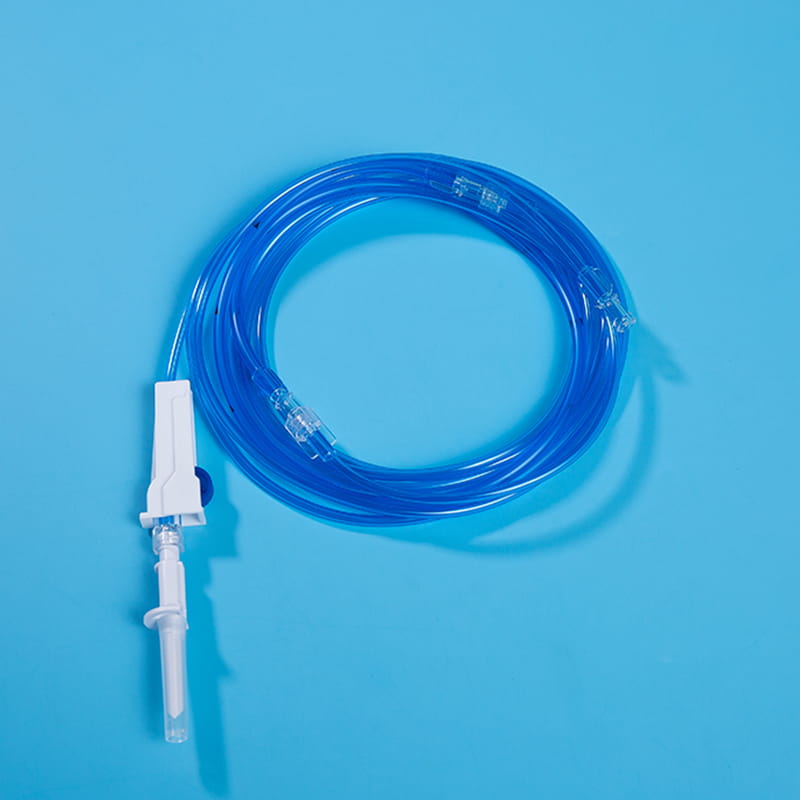
interface for external connection is the bridge between the central venous catheter and external medical equipment. Through these interfaces, the central venous catheter can be connected to infusion sets, syringes and other equipment to achieve various medical operations such as infusion, drug administration, and blood collection. The design of these interfaces has good sealing and compatibility, and common ones include Luer connectors and needleless infusion connectors. The Luer connector is connected by threads to ensure a tight connection without leakage; the needleless infusion connector adopts a diaphragm design, which can complete the infusion operation without acupuncture, reducing the risk of infection. At the same time, some interfaces also have anti-backflow function to prevent blood from reflux and blocking the catheter, and support multiple devices to be connected at the same time to meet complex clinical needs.
幅広い臨床応用シナリオ
実際の医療用途では、中央の静脈カテーテルキットの使用シナリオは非常に広いです。集中治療の分野では、大量の注入と頻繁な薬物療法を必要とする重大な状態の患者のために、中央静脈カテーテルは、患者の液体や薬物のニーズを満たすために高速で安定した注入チャネルを提供できます。敗血症性ショックのある患者を例として摂取すると、救助プロセス中に、大量の結晶性液、コロイド液、血管作用薬を短時間で補充する必要があります。中央の静脈カテーテルは、これらの液体と薬物が迅速に血液循環に入り、衝撃状態を迅速に修正できるようにすることができます。同時に、血行動態モニタリングは、中央の静脈カテーテルを介して実行することもできます。医師は、圧力センサーをカテーテル界面に接続して、中心静脈圧や肺動脈くび圧力などのパラメーターをリアルタイムで取得します。これにより、医師は患者の心機能と血液循環の状態をリアルタイムで理解し、正確な治療計画を策定するための重要な基礎を提供します。
腫瘍治療では、多くの化学療法薬は血管に対して非常に刺激的であり、末梢静脈による投与は静脈炎などの合併症を引き起こす可能性があります。中央の静脈カテーテルキットは、カテーテルを中央静脈に配置し、化学療法薬が大きな血管に直接入ることを可能にし、すぐに希釈し、それにより血管への刺激を軽減し、合併症の確率を低下させ、患者の治療耐性とコンプライアンスを改善します。たとえば、ドキソルビシンなどの非常に刺激性のある化学療法薬を投与される乳がん患者は、中央静脈カテーテルを使用して、薬物凝固によって引き起こされる皮膚壊死や組織潰瘍などの深刻な結果を効果的に回避できます。同時に、長期および複数の化学療法を必要とする患者の場合、中央の静脈カテーテルは、繰り返しの穿刺の痛みを軽減し、治療の連続性を改善します。
さらに、栄養サポート療法では、長期のcom睡状態や重度の火傷などの胃腸管を介して十分な栄養を摂取できない患者の完全な非経口栄養サポートに中央静脈カテーテルを使用できます。中心の高濃度の高カロリー栄養溶液を中心静脈から与えると、患者の栄養素に対する体のニーズを満たし、患者の回復を促進できます。大規模な火傷のある患者を例にとると、胃腸機能は外傷のために抑制され、通常は消化して吸収することはできません。この時点で、患者の窒素バランスを維持し、体に必要なエネルギーを補充し、創傷治癒を加速するために、中央静脈カテーテルを介して、アミノ酸、脂肪乳剤、グルコース、その他の成分を含むオールインワン栄養溶液が与えられます。同時に、医療スタッフは、中央の静脈カテーテルを介して患者の電解質、血糖、その他の指標を監視し、時間内に栄養サポート計画を調整することもできます。
厳格および標準化された操作手順
operating procedures of the central venous catheter kit need to strictly follow the specifications and standards. Before the operation, the doctor needs to conduct a comprehensive assessment of the patient's condition, including the patient's age, weight, underlying diseases, coagulation function, etc., and select the appropriate puncture site and central venous catheter type. Common puncture sites include the internal jugular vein, subclavian vein and femoral vein. Different sites have their own advantages and disadvantages, and they need to be carefully selected according to the specific situation of the patient. At the same time, detailed explanations and communication should be given to the patient, and the patient should be informed of the operation process, possible risks and key points of cooperation to obtain the patient's cooperation. During the operation, the principle of aseptic operation must be strictly followed. The puncture site must be disinfected with iodine more than three times, and the diameter of the disinfection range must not be less than 15 cm. A large sterile sheet must be laid to ensure that the entire operation is carried out in a sterile environment. Then follow the steps of trocar puncture, guide wire insertion, dilation with a dilator, insertion of a removable sheath, insertion of a central venous catheter, fixation of the catheter, and connection of an external interface. Taking internal jugular vein puncture as an example, under ultrasound guidance, after determining the puncture point, the trocar is inserted at an angle of 30-45 degrees. After seeing the blood return, it is confirmed that it is in the vein, and then the subsequent components are inserted according to the process. After the operation is completed, the patient needs to be closely observed and cared for, and the patient must be monitored for complications and treated in a timely manner. This includes observing whether the puncture site is red, swollen, or exuded, and changing the dressing regularly; monitoring the patient's body temperature, blood routine, and other indicators to determine whether an infection has occurred; evaluating the function of the catheter to ensure smooth infusion, blood collection, and other operations.
課題とリスクが直面しました
中央の静脈カテーテルキットは医療分野で重要な役割を果たしていますが、使用中のいくつかの課題とリスクにも直面しています。感染は、中央静脈カテーテルの最も一般的な合併症の1つです。カテーテルは長い間体内に残っているため、細菌や他の微生物が侵入しやすく、局所感染または全身感染を引き起こします。バクテリアは、主に、穿刺部位での皮膚のコロニー形成、カテーテルコネクタの汚染、注入システムの汚染を通して体に入ります。血栓症も無視できない問題です。カテーテルは、血管内の血管内皮を刺激し、血液凝固の変化を引き起こし、それによって血栓を形成する可能性があります。血栓が落ちると、肺塞栓症などの深刻な合併症を引き起こす可能性があります。さらに、カテーテルの閉塞や変位などの問題は、中央の静脈カテーテルの通常の使用と治療効果にも影響する可能性があります。カテーテルの閉塞は、薬物沈着、血液凝固などによって引き起こされる可能性があります。カテーテルの変位は、不適切な患者の活動やゆるい固定などの要因に関連している可能性があります。
For more information, please call us at +86-18913710126 or email us at .
ポリイミド チューブは、現代の医療機器工学において不可欠なものとなっています。低侵襲カテーテルから電気生理学ツールや神経血管系システムに至るまで、医療専門家はこの材料の卓越した性能...
FEP ガイドワイヤー保護シース チューブについて 低侵襲医療処置は、外傷を軽減し、回復を促進し、臨床転帰を改善することにより、患者ケアに革命をもたらしました。こ...
A 医療用蠕動ポンプチューブ は、医療機器における正確、無菌、制御された液体送達のために設計された特殊な液体移送コンポーネントです。これらの精密チューブは、輸液治療装...
カテーテル可視化技術の進化 低侵襲手術は現代医療を根本的に変革し、外科医やインターベンション放射線科医が小さな切開や動脈アクセスポイントを通じて複雑な手術を行えるようになりまし...
現代の医療における医療用カテーテルを理解する 医療機器は患者ケアに革命をもたらしましたが、その中で最も重要なものには次のようなものがあります。 ...
真っ直ぐなカテーテルは気道のほとんどに到達しますが、気管切開の枝や困難な気管支の経路に入る最後の数センチメートルでは、位置変更により呼吸困難にある患者が費やすことのできない時間を無駄に...